
A Quiet Home Between Hospital Contracts
A travel nurse built a small, quiet home for the miles between difficult hospital contracts.
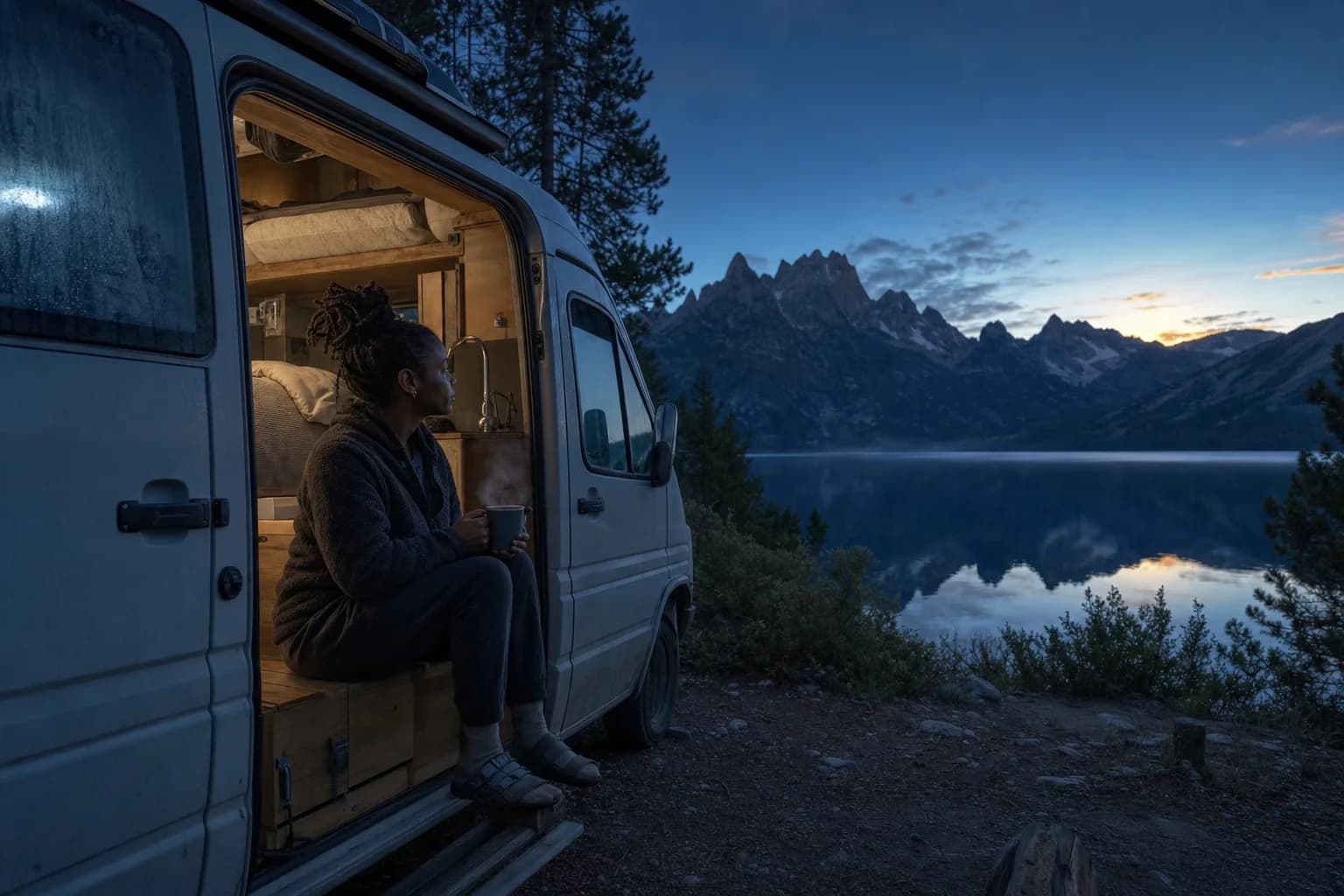
Their story
Megan started traveling for nursing contracts in late 2020. Hotel rooms blurred together. Furnished rentals were unpredictable. On days off, she needed silence more than sightseeing. She bought a plain ProMaster and hired a carpenter friend to build a bed, a small sink, and cabinets sturdy enough for rough roads.
The van became a decompression chamber between hospitals. After a winter contract, she drove slowly west and reached Grand Teton National Park before the summer crowds. At Jenny Lake, she woke at 4:30 a.m. out of habit, made coffee in the dark, and watched the mountains appear one edge at a time. It was the first morning in months when being awake early felt like a gift.
Road life was not automatically restorative. She once drove when too tired, clipped a campsite post, and spent the next day replacing a taillight. Since then, she treats fatigue as a weather warning. The van stops when she does. Holidays are flexible: Thanksgiving may be with colleagues, Christmas with family in Minnesota, New Year's Day beside a quiet desert road.
Megan no longer lives in the van full-time, but it follows her to most contracts. She keeps the interior spare and the schedule looser than before. Her advice is not to romanticize mobility. A moving home still needs rest, neighbors, groceries, and care. Her dream is a full month without a shift, somewhere on the Oregon coast, with no alarm set.
The fatigue rule that mattered more than the route
Megan once clipped a campsite post after convincing herself that one more hour was harmless. The repair was minor. The lesson was not. After a run of shifts, she limited the first day to whatever distance felt easy before departure, not what the map promised.
She also kept the driver's area clear and the bed ready. Arrival did not require building a room. If exhaustion appeared, she could stop at a legal campsite or motel, eat, and sleep. Mobility only supported recovery when she refused to turn it into another performance.
Her dream is a full month without a shift, somewhere on the Oregon coast, with no alarm set.
Plan the journey
Turn their road into your route.
Use this as a starting itinerary, then adjust it for your rig, weather, pace, and current access rules.
- Trip length
- 17-20 days between work assignments
- Approximate distance
- About 1,900 miles
- Best window
- June or September
- Driving rhythm
- No more than 3 hours after a work stretch, then 2-3 night rests
- Booking strategy
- Reserve Jenny Lake-region camping first and maintain motel recovery options
- Working budget
- $1,500-$2,400
Follow this route.
Drive estimates are planning numbers, not promises. Fuel, food, road work, and a trailer turn every map estimate into a longer day.
Minneapolis to Badlands region
2 nightsSplit into two legs if tired
Make the first stop a recovery stop. Walk at sunrise only if sleep came first.
Watch for: Shift-work fatigue is a safety issue, not an inconvenience.
Black Hills
3 nightsAbout 2 hours
Stay stationary. Choose one drive and one walk, with an entire day left open.
Watch for: Popular scenic roads may have tunnel and size restrictions.
Bighorn Mountains
2 nightsAbout 4 hours
Use the mountains to break the trip west, but choose the route based on grade, weather, and van condition.
Watch for: Do not let navigation send an unfamiliar van onto a steep route without review.
Grand Teton region
5 nightsAbout 5 hours