
The Bunk Beds That Launched a New Adventure
Retirement gave Teresa and Arturo time. Bunk beds gave their grandchildren a reason to join them.
Their story
Arturo retired from the postal service on a Friday. On Monday, Teresa showed him a listing for a small bunkhouse. They had talked about travel for years, usually in the future tense. The grandchildren turned the discussion into a deadline by asking where their beds would be.
Their first trip with Eva and Leo was to Bandelier, close enough for a rescue if necessary. Nobody needed rescuing, though Arturo forgot the water regulator and Teresa packed six towels but no pillows. The children slept in sweatshirts and called it survival camping.
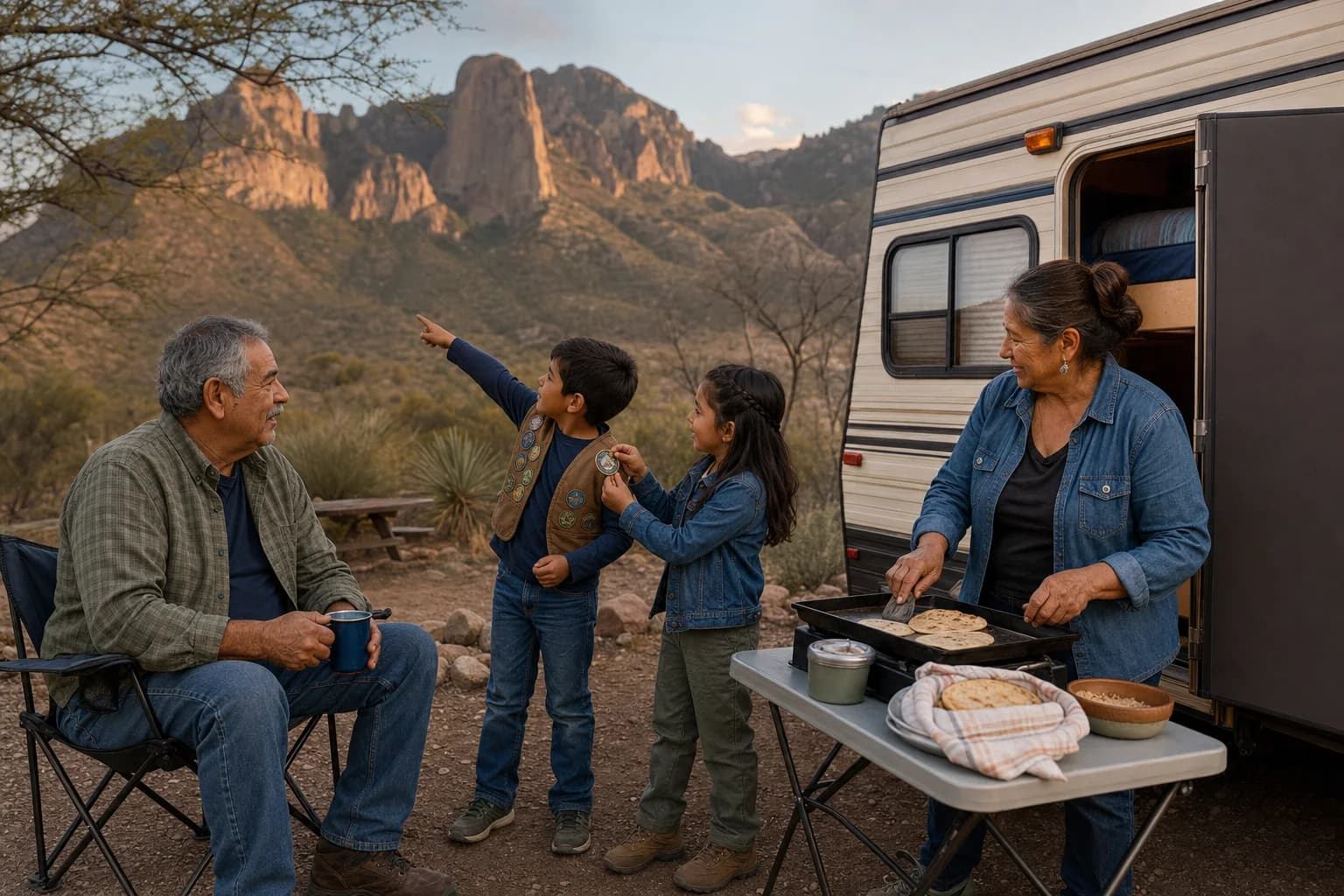
By the following spring they were in Big Bend during Easter week. The road into Chisos Basin made Arturo reconsider every item in the trailer. The campground made him forget the drive. They watched evening light move across the cliffs while Teresa warmed tortillas and the children traded Junior Ranger facts with neighboring campers.
Most trips remain just the two of them, but the bunks stay made. They have learned to travel during shoulder seasons, to stop for local bakeries, and to avoid arriving anywhere on a Sunday afternoon when half of Texas appears to be towing home. Teresa wants to see the redwoods. Arturo wants to return to Big Bend. Eva and Leo want anywhere with badges. The trailer is less a retirement plan than a standing invitation.
Why the bunk beds mattered
Teresa and Arturo could have traveled in a smaller couples trailer. The bunks were a deliberate invitation. The grandchildren could leave a book, blanket, and collection of rocks in one place without turning the adult bed into storage.
The grandparents also learned that a child-friendly day ends earlier than an adult itinerary expects. They returned to camp for lunch, kept the afternoon flexible, and allowed Junior Ranger programs to replace longer hikes. The children's questions gave the trip its pace.
The trailer is less a retirement plan than a standing invitation.
Plan the journey
Turn their road into your route.
Use this as a starting itinerary, then adjust it for your rig, weather, pace, and current access rules.
- Trip length
- 11-13 days
- Approximate distance
- About 1,450 round-trip miles
- Best window
- March or early April
- Driving rhythm
- Two-night transit stops and four nights in Big Bend
- Booking strategy
- Reserve Chisos Basin or a suitable nearby RV base first
- Working budget
- $1,700-$2,600 for two adults and two children
Follow this route.
Drive estimates are planning numbers, not promises. Fuel, food, road work, and a trailer turn every map estimate into a longer day.
Santa Fe to Carlsbad
2 nightsAbout 5 hours
Use the caverns as the first major stop and let the grandchildren complete Junior Ranger work at their pace.
Watch for: Cavern entry and tour reservations may be required. Check official details.
Fort Davis
2 nightsAbout 3 hours
Visit the historic site and observatory region while adjusting to warmer weather.
Watch for: Night programs and mountain temperatures require advance layers and reservations.
Big Bend, Chisos or nearby base
4 nightsAbout 2 hours
Use one basin day, one river-side drive, one short hike, and one full rest period.
Watch for: Roads, heat, water availability, and trailer-size limits must be checked directly with the park.
Marathon or Alpine
1 nightAbout 1.5 hours