
The Honeymoon That Took the Long Way West
Their 2020 wedding changed shape. So did the honeymoon, eventually stretching from Georgia to the California desert.
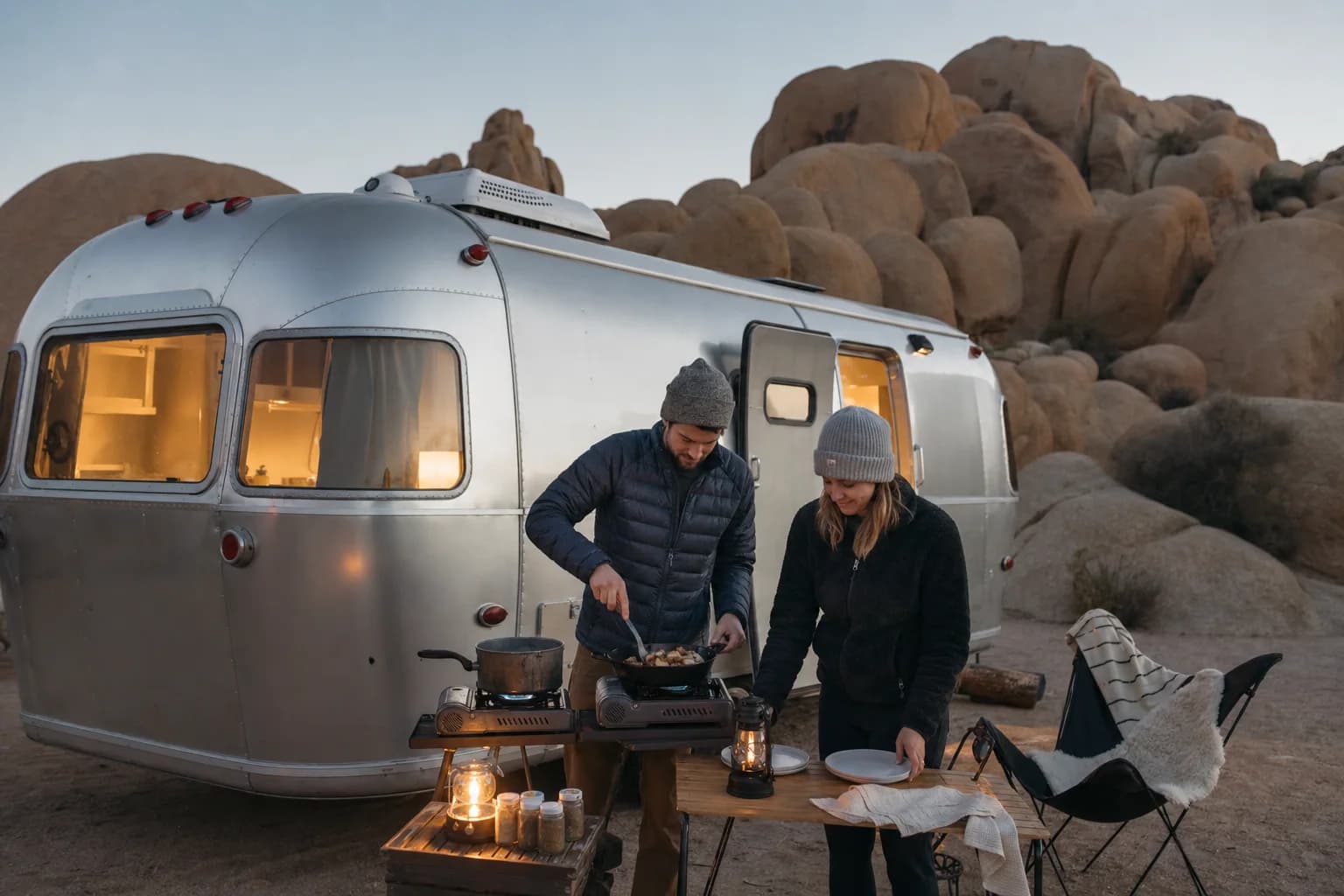
Their story
Dana and Malik were supposed to get married in front of 140 people in June 2020. Instead, they signed papers on Dana's sister's porch with twelve relatives watching from spaced-out lawn chairs. The postponed reception became a used Airstream, partly because travel felt uncertain and partly because Malik had been following trailer renovation videos with suspicious dedication.
Their first long trip followed old sections of Route 66. They worked East Coast hours from Oklahoma, ate lunch at 10 a.m. in New Mexico, and reached Joshua Tree on the anniversary of the wedding they had planned. The desert gave them wind, cold nights, and a campsite surrounded by rocks that looked like a committee of sleeping animals.
The low point came outside Flagstaff when a drawer opened during a turn and released every spice jar they owned. For months afterward, the trailer smelled faintly of cumin. The high point was less dramatic: Thanksgiving dinner in 2021, cooked on two burners near Santa Fe, with neighbors they had met that morning. Someone brought tamales. Malik burned the rolls. Nobody minded.
They still live in Atlanta and travel in six to eight week arcs, trading the trailer desk at lunchtime. The Airstream is not their escape from ordinary life. It is where ordinary life becomes more visible: work, dishes, disagreement, repair, dinner, stars. They hope to follow the Trans-Canada Highway next, ideally with better drawer latches.
How two remote jobs fit into one dinette
Dana and Malik divided the trailer by sound rather than square footage. The person on a call had the dinette. The other person took the bed, truck, campground picnic table, or a library. They stopped pretending both could hold meetings at once in 23 feet. Each Sunday they compared calendars and marked the hours when the trailer needed to be a quiet office.
The route worked because the destination weeks were slow. A five-night reservation did not mean five sightseeing days. It meant two workdays, one grocery evening, one proper outing, and time to recover from the drive. Their most expensive mistake was moving too frequently during the first week. Their most valuable change was treating travel days as days off.
They hope to follow the Trans-Canada Highway next, ideally with better drawer latches.
Plan the journey
Turn their road into your route.
Use this as a starting itinerary, then adjust it for your rig, weather, pace, and current access rules.
- Trip length
- 27-30 days
- Approximate distance
- About 4,800 round-trip miles
- Best window
- October, November, March, or early April
- Driving rhythm
- Three travel days followed by a four- or five-night work base
- Booking strategy
- Reserve desert weekends and holiday nights; use commercial parks for work weeks
- Working budget
- $4,500-$6,500 for a month, depending on fuel and dining
Follow this route.
Drive estimates are planning numbers, not promises. Fuel, food, road work, and a trailer turn every map estimate into a longer day.
Atlanta to Nashville
1 nightAbout 4 hours
Use a close first stop to catch hitch, brake-controller, and packing problems while familiar stores are still nearby.
Watch for: The first departure takes longer than expected. Do not pair it with the longest drive.
Ozarks base near Bentonville
3 nightsAbout 7 hours split by lunch
Work two weekdays, ride or walk one trail system, and use a full-hookup site to learn tank rhythm.
Watch for: Mountain roads can be narrow and steep. Route by truck-friendly highways.
Oklahoma City
2 nightsAbout 3.5 hours
Visit the Route 66 districts and use the second evening for groceries, laundry, and work preparation.
Watch for: Urban RV parks can be noisy. Choose them for convenience, not atmosphere.