
Three Generations, One Road to Banff
A fifth wheel with an extra bedroom made room for three generations and one very opinionated rice cooker.
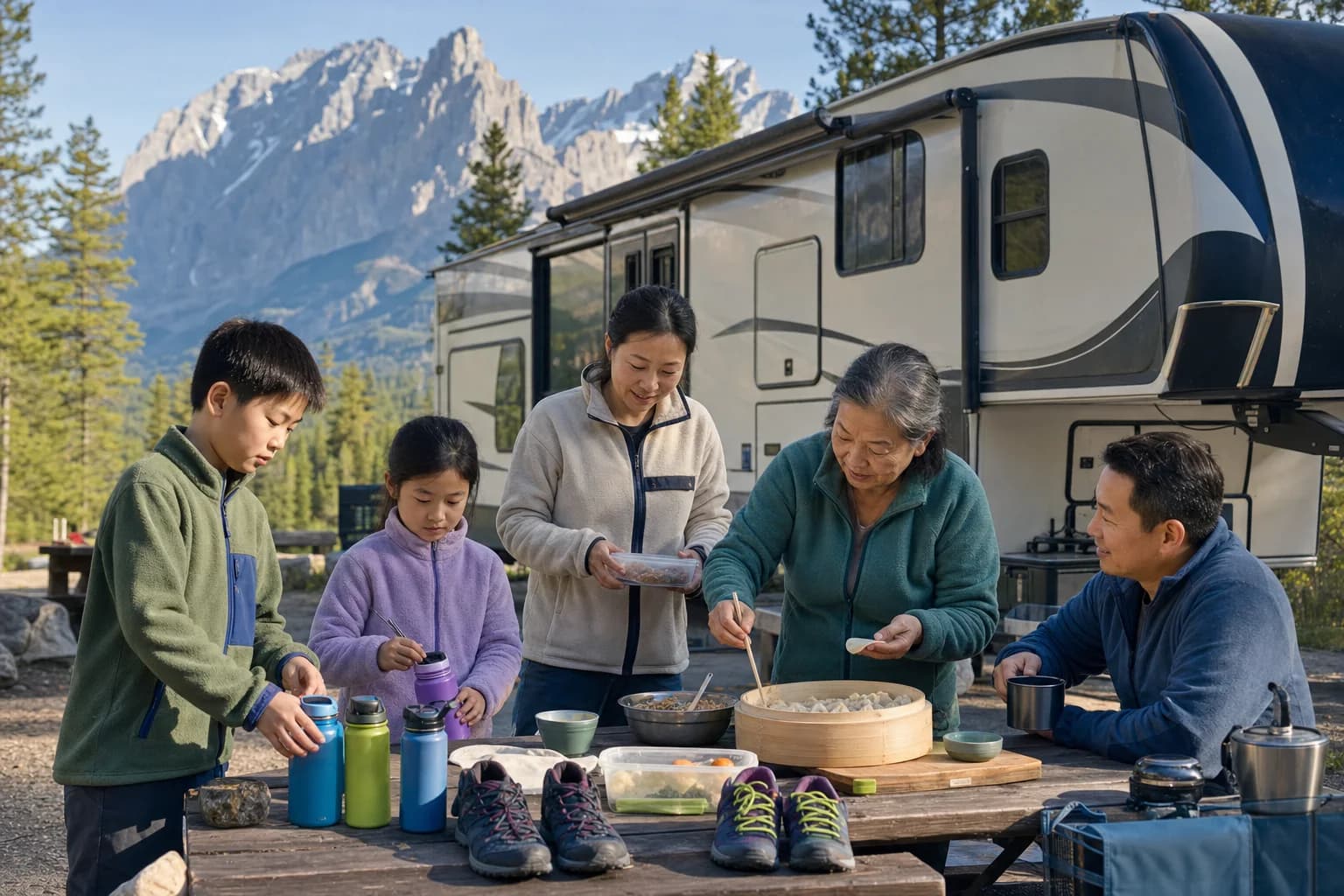
Their story
The fifth wheel was Victor's idea. Bringing his mother was Iris's. Nai Nai agreed on the condition that nobody call the foldout sofa a bed. Their first summer, in 2019, the five of them crossed Ontario slowly, discovering that every fuel stop took forty minutes and that children will eat any food described as road food.
The 2020 season stayed close to home. Provincial rules changed, reservations moved, and the trailer became a place to breathe without pretending the year was normal. By 2022 they were ready for the west. They planned five days in Banff and stayed nine, taking early buses, packing dumplings for trail lunches, and watching Nai Nai outwalk everyone around Lake Louise.
Not every memory belongs in a postcard. Outside Winnipeg, a crosswind turned Victor's hands white on the steering wheel. In Saskatchewan, the slide refused to retract until a retired electrician from the next site found a loose connection. The family celebrated Canada Day in Calgary with grocery-store cupcakes because they had lost track of the date.
Their system now looks effortless only because it has been revised dozens of times. Shoes live in color-coded bins. Sophie checks the site dimensions. Max handles water bottles. Nai Nai supervises dinner and rejects campground rice as a concept. Iris says the real gift is not seeing more places. It is giving the children long, unhurried time with their grandmother. The map is impressive. The card games matter more.
Designing a trip for three generations
Iris stopped measuring successful days by how many attractions the family completed. A good day needed one shared activity, one reliable meal, and enough unscheduled time for Nai Nai and the children to move at different speeds. The fifth wheel made that possible because someone could rest without sending everyone back to a hotel room.
The family also gave every person a real job. Sophie read campground arrival instructions. Max checked water bottles. Victor handled hitching. Iris managed the route and food. Nai Nai kept a small pantry list and made sure the rice cooker was packed where it could not become a projectile. Shared responsibility prevented the adults from becoming a two-person service crew.
The card games matter more.
Plan the journey
Turn their road into your route.
Use this as a starting itinerary, then adjust it for your rig, weather, pace, and current access rules.
- Trip length
- 26-32 days
- Approximate distance
- About 7,200 round-trip kilometres
- Best window
- Late June through early September
- Driving rhythm
- Maximum 450 kilometres on travel days, followed by rest days
- Booking strategy
- Reserve Banff and Jasper on Parks Canada launch dates, then fill transit stops
- Working budget
- CAD $6,500-$9,000 for five people
Follow this route.
Drive estimates are planning numbers, not promises. Fuel, food, road work, and a trailer turn every map estimate into a longer day.
Markham to Sault Ste. Marie
2 nightsAbout 7.5 hours plus stops
Split the Ontario crossing with a full rest day. Use the stop to adjust sleeping arrangements and food storage for five people.
Watch for: Toronto departure traffic can add hours. Leave before dawn or after the morning rush.
Lake Superior north shore
3 nightsAbout 4 hours
Choose a provincial park base and keep one day for the shoreline. The scenery begins here, so do not treat northern Ontario as dead mileage.
Watch for: Fuel opportunities become less frequent. Refill well before empty and carry food for an extra day.
Thunder Bay to Winnipeg
3 nightsSplit the drive with an overnight near Kenora
Use Winnipeg as the first major resupply. Restock produce, do laundry, and give Nai Nai a day without climbing steps repeatedly.
Watch for: Long daylight can disguise fatigue. Set a stop time rather than driving until dark.