
The Evacuation Trailer That Became a Way Home
A storm evacuation made the trailer practical. Returning to the Gulf made it theirs.
Their story
The LeBlancs bought their trailer in August 2021, two weeks before Hurricane Ida. They had imagined fall weekends and state parks. Instead, the first trip was an evacuation to Andre's cousin's driveway near Houston, with important papers in a plastic tote and the children's school supplies wedged under a bunk.
Nothing about that week felt like camping. The trailer was simply a small room that moved, which was exactly what they needed. After they returned home and repairs began, Camille wondered whether every future trip would carry the same anxiety. In November, they booked two nights at Gulf State Park to find out.
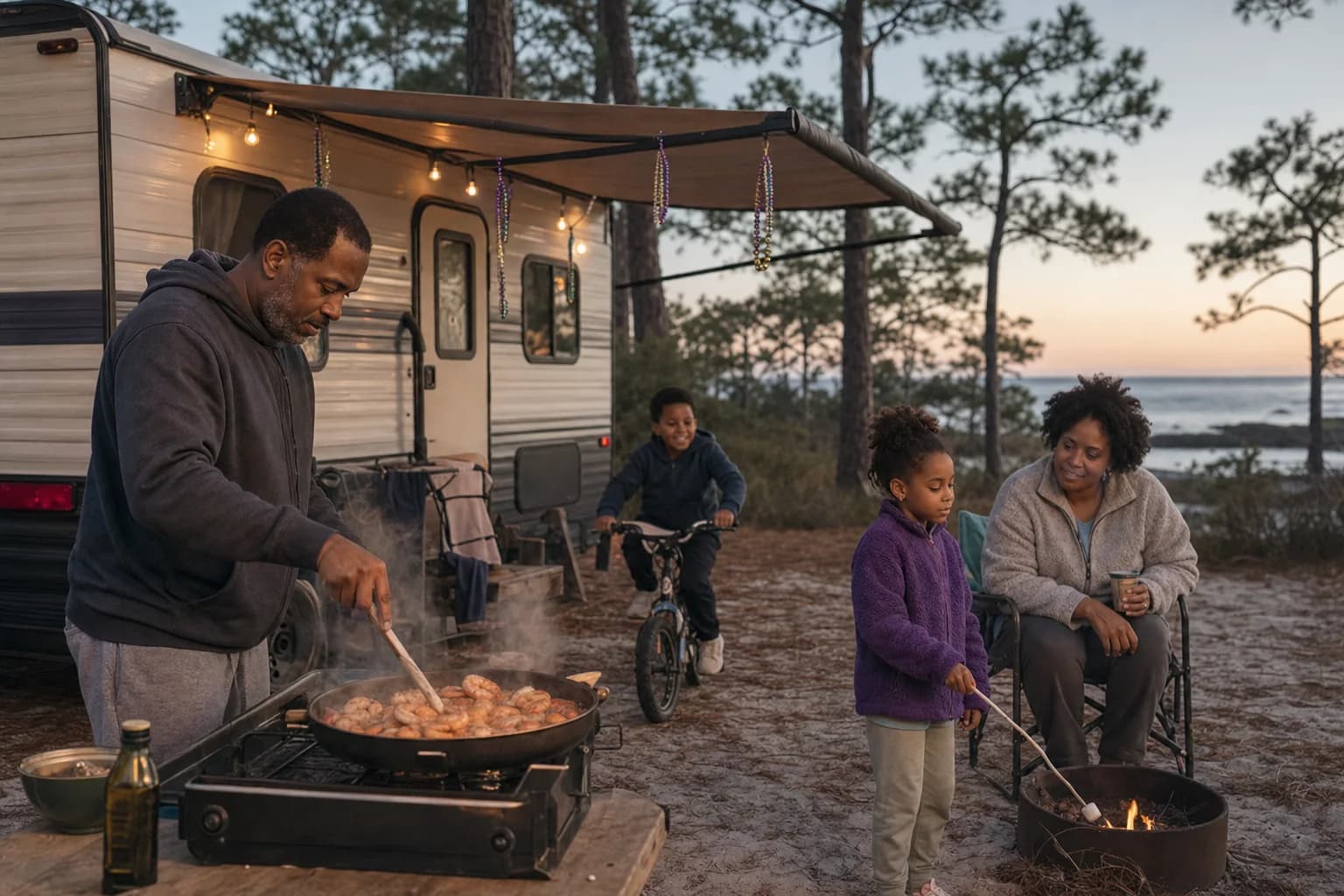
The first evening was cool and ordinary. Jo rode a bicycle. Remy burned a marshmallow. Andre cooked shrimp outside. Camille slept through the night for the first time in weeks. The trailer stopped being the thing they had fled in and became the place where their family could exhale.
Their routes still favor the Gulf, with spring trips before the heat and fall trips after storm season. They check forecasts carefully and never joke about evacuation lists. Yet their travel is full of lightness: Mardi Gras beads on the awning, Christmas gumbo made in a too-small pot, and the annual argument about whether beach sand is worse than campground mud. The dream is a summer north to Maine. The lesson is already settled: practical tools can hold emotional meaning, whether we ask them to or not.
The difference between a vacation checklist and an evacuation checklist
After Ida, Camille kept two versions of the packing list. The travel list held camp chairs, bicycles, and beach towels. The evacuation list began with documents, medication, pet supplies, fuel, cash, chargers, and a destination outside the forecast path. The lists shared a trailer but not a purpose.
That distinction let the family enjoy coastal trips again without pretending storms were harmless. They checked forecasts, maintained the trailer, and left room to cancel. The first ordinary evening at Gulf State Park mattered because nothing dramatic happened. Dinner, bicycles, marshmallows, sleep. Ordinary was the gift.
The lesson is already settled: practical tools can hold emotional meaning, whether we ask them to or not.
Plan the journey
Turn their road into your route.
Use this as a starting itinerary, then adjust it for your rig, weather, pace, and current access rules.
- Trip length
- 9-11 days
- Approximate distance
- About 900 round-trip miles
- Best window
- March, April, late October, or November
- Driving rhythm
- Two coastal bases and one practical overnight
- Booking strategy
- Reserve weekends; maintain a separate evacuation-ready destination list
- Working budget
- $1,100-$1,800
Follow this route.
Drive estimates are planning numbers, not promises. Fuel, food, road work, and a trailer turn every map estimate into a longer day.
Lafayette to Mississippi Gulf Coast
2 nightsAbout 3.5 hours
Use a familiar coastal stop to leave work behind and confirm the trailer after storage.
Watch for: Storm-damaged parks and roads may have changing availability.
Gulf State Park area
4 nightsAbout 2 hours
Bicycle, cook outside, and keep one weather day open. The campground is the destination, not only a base for attractions.
Watch for: Holiday and event weekends fill quickly.
Florida panhandle
2 nightsAbout 2 hours
Add this leg only when weather is settled. Choose a state-park or private-campground backup farther inland.
Watch for: Coastal wind and surge risks require a willingness to leave early.
Mobile return stop
Optional 1 nightAbout 2 hours