
They Chose the View Over the Wi-Fi
Two remote jobs made the Alaska Highway possible, provided they could stop trying to work from every beautiful place.
Their story
Amelia and Jonah left Virginia in January 2022 with two laptops, three cellular plans, and the belief that connectivity could be engineered. For a while, it could. They worked from library lots, laundry rooms, and one unusually welcoming tire shop. They became experts at reading signal bars without moving their heads.
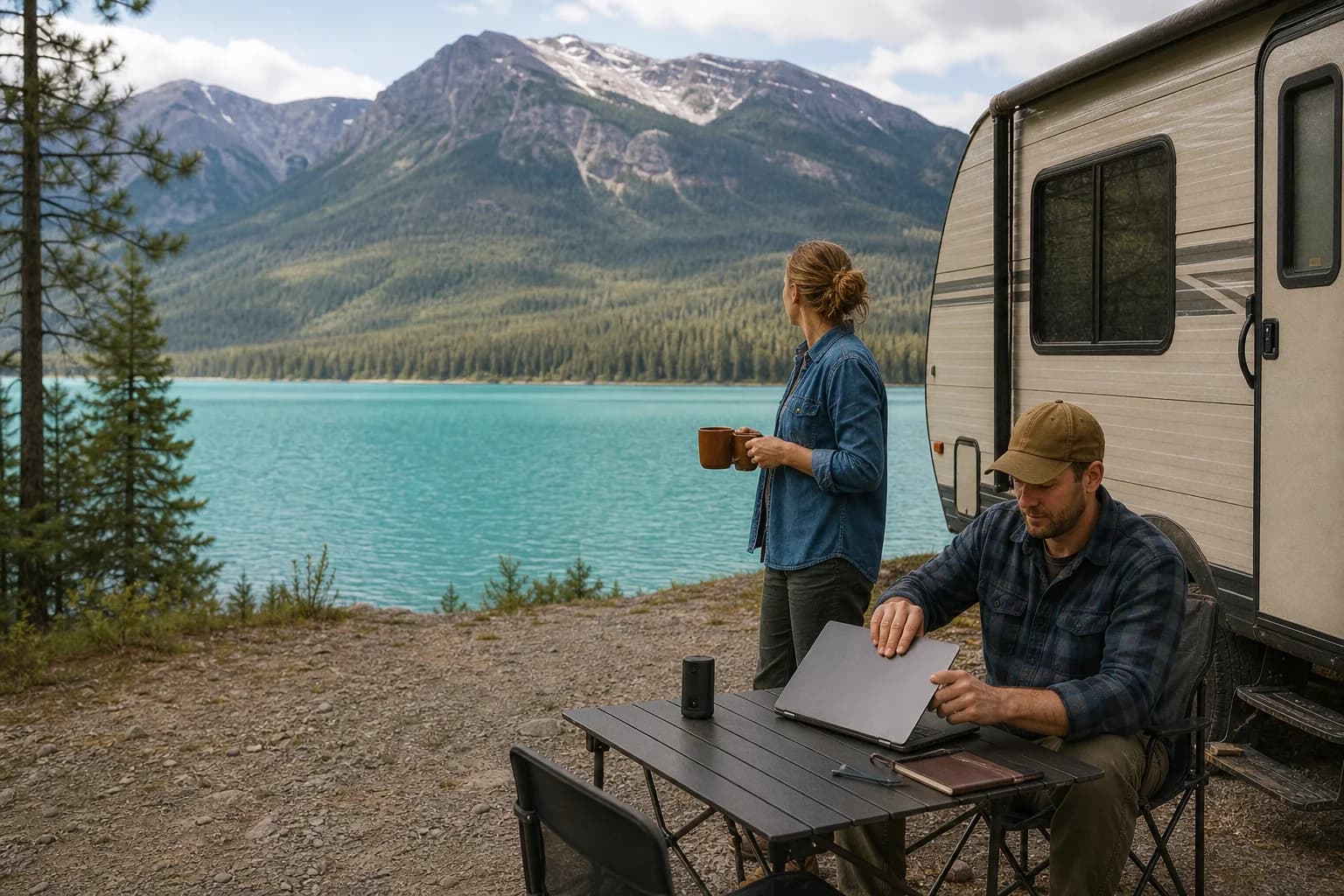
The Alaska Highway challenged the system. Near Muncho Lake, their connection weakened to a single unreliable thread while the water outside turned an impossible blue. Jonah drove twenty miles looking for service. Amelia closed her computer. By dinner, they agreed to use vacation days rather than turn the best places into bad offices.
That decision changed their route. They worked longer blocks in towns and protected three or four disconnected days between them. They reached Alaska in time for the summer solstice and celebrated the Fourth of July in Tok with campground neighbors from six states. A broken trailer step in the Yukon was repaired with bolts from a mechanic who refused payment and accepted cookies.
They are now part-time rather than full-time, keeping a small apartment in Richmond. The change was not a retreat. It gave the road a boundary and their work a desk. Amelia says reliable internet is useful, but unreliable internet can be clarifying. Their next long route will be Labrador, planned around actual leave on the calendar.
The day they stopped pretending every campsite was an office
At Muncho Lake, the connection was barely strong enough to show a meeting invitation and not strong enough to join it. Jonah drove in search of signal while Amelia sat beside a place they had crossed a continent to see. They used vacation time for the next three days and rewrote the rest of the route around work bases.
That separation improved both parts of the trip. In towns, they worked full days and handled every practical task. In remote sections, the computers stayed packed. The trailer became a home again instead of a weakly connected office with a beautiful distraction outside.
Their next long route will be Labrador, planned around actual leave on the calendar.
Plan the journey
Turn their road into your route.
Use this as a starting itinerary, then adjust it for your rig, weather, pace, and current access rules.
- Trip length
- 8-10 weeks
- Approximate distance
- About 10,000 round-trip miles
- Best window
- Late May through August
- Driving rhythm
- Work weeks in towns, 3-5 disconnected days between them
- Booking strategy
- Reserve major holiday nights and Denali-area camping; leave highway stops weather-flexible
- Working budget
- $11,000-$16,000 for two people
Follow this route.
Drive estimates are planning numbers, not promises. Fuel, food, road work, and a trailer turn every map estimate into a longer day.
Virginia to the northern plains
10-14 nights across work basesSeveral 250-mile legs
Use established RV parks near cities for the first working weeks. Solve connectivity and maintenance before Canada.
Watch for: A cross-country sprint at the start can damage the entire schedule.
Calgary or Edmonton
5 nightsRegional work base
Complete meetings, service the truck, stock food, and organize border documents before turning north.
Watch for: Do not begin the Alaska Highway needing tires or a mysterious warning light.
Dawson Creek to Fort Nelson
3-4 nightsTwo moderate legs
Mark the highway start, then slow down. Fuel when available and stop well before fatigue.
Watch for: Construction, frost heaves, and wildlife can change safe speeds quickly.