
Four Bikes, One Toy Hauler, No Wasted Space
They chose a toy hauler for mountain bikes and discovered the empty cargo floor was the best family room they had.
Their story
The Ramirezes did not want a giant trailer. They wanted four bicycles out of the Arizona sun. A small toy hauler solved the storage problem and created another: every camp setup began with unloading half the family's belongings onto the ground. Sofia called it the yard sale phase.
Their first season stayed close to Phoenix. February weekends in the desert became practice for summer in Colorado. They learned that children who complain about a two-mile ride will happily circle a campground for three hours, especially if another child has a scooter. They also learned that dust can enter through openings not visible to the human eye.
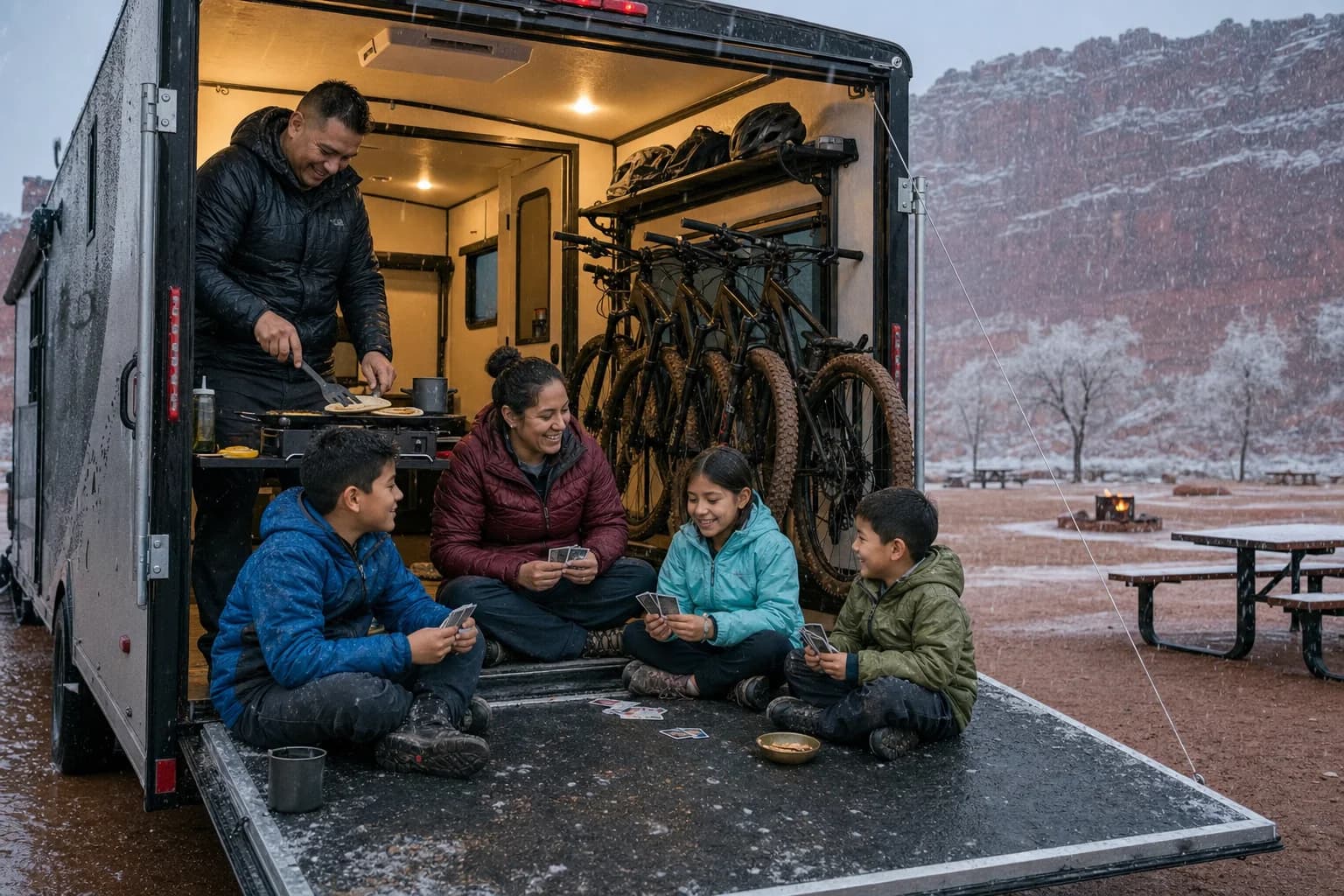
In Fruita, a Mother's Day trip coincided with an unexpected cold snap. The water hose froze, the bikes collected sleet, and the family played cards on the cargo floor while Luis made quesadillas one at a time. Everyone remembers it as the weekend they laughed hardest. The following year they returned in warmer weather and rode the trail they had watched disappear under snow.
They buy used gear, cook nearly every meal, and favor public campgrounds over resorts. Sofia tracks expenses because affordability is what keeps the trips recurring. Their long-term dream is the Great Divide route in sections. Their current goal is simpler: teach Sol to ride without training wheels before fall. The trailer floor will become a workshop, a dining room, or a dance floor as needed.
How the cargo bay became the useful room
At first, the family treated the toy-hauler floor as storage. Once the bikes came out, it became an empty room with no purpose. Sofia added a washable rug and folding table. Suddenly the same space handled meals, homework, repairs, and the evening card game that saved the cold Fruita weekend.
The key was loading in reverse order. Helmets and the children's bikes came out first. Adult bikes were secured separately so one could be removed without rebuilding the stack. Every tool had one pouch. The system reduced setup time enough that a two-night weekend still felt worth towing.
The trailer floor will become a workshop, a dining room, or a dance floor as needed.
Plan the journey
Turn their road into your route.
Use this as a starting itinerary, then adjust it for your rig, weather, pace, and current access rules.
- Trip length
- 12-14 days
- Approximate distance
- About 1,500 round-trip miles
- Best window
- Late April through May, or late September
- Driving rhythm
- Three-night riding bases with short recovery days
- Booking strategy
- Reserve Fruita on event and holiday weekends; keep desert transit stops flexible
- Working budget
- $1,600-$2,500 for five people
Follow this route.
Drive estimates are planning numbers, not promises. Fuel, food, road work, and a trailer turn every map estimate into a longer day.
Mesa to Sedona region
2 nightsAbout 2.5 hours
Use the first stop to test bike loading and unloading. Choose family routes rather than beginning with the most technical trail.
Watch for: Popular trailheads may not fit a truck and toy hauler. Unload at camp and drive only the truck.
Page or Lake Powell region
1 nightAbout 3 hours
Keep this a scenic reset and water stop, not another full riding day.
Watch for: Heat and exposed sites can make the cargo area uncomfortable.
Moab
3 nightsAbout 4.5 hours
Ride one morning, use one park day, and keep one recovery day. Children need a different schedule than adults who planned the route.
Watch for: Bike security and trail difficulty deserve real planning.
Fruita