
They Stopped Saving Adventure for Summer
A Kansas family traded one big annual vacation for a dozen smaller departures and found the year felt longer.
Their story
The Thompsons used to spend January planning one summer vacation. By August, it was over and the rest of the year felt like waiting. In 2018, they bought an entry-level bunkhouse from a family two towns over and decided to count nights away rather than miles traveled.
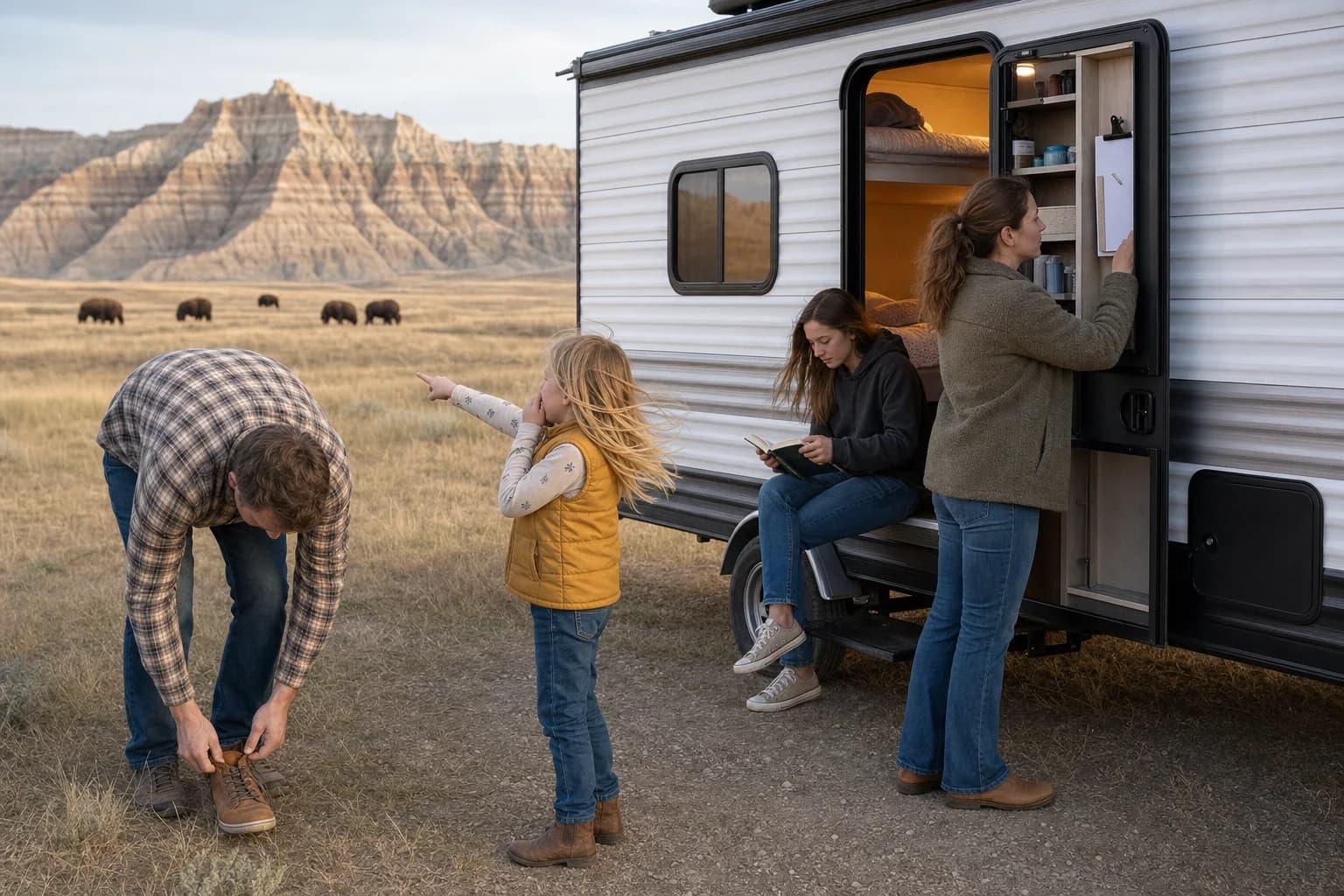
The first year included nearby lakes, county parks, and a windy October weekend when nobody left the trailer except to retrieve a blown-away shoe. The second year reached Badlands National Park. At Sage Creek, bison wandered beyond the campground while Jack whispered loudly enough for the entire loop to hear.
Their travel calendar now has a trip in nearly every season. They camp on Memorial Day but stay home on the Fourth of July, when campgrounds feel busiest. A November weekend near Oklahoma became an annual tradition, complete with foil-packet leftovers after Thanksgiving. During the 2020 shutdowns, the trailer sat in the driveway and served as a classroom, office, and occasionally a very small restaurant.
April keeps the packing list on the pantry door. Cody maintains a toolbox that weighs more than necessary. Hazel, now a teenager, still chooses the lower bunk because it has better reading light. Their goal is not all 50 states, though they would not object. It is to make travel part of the year rather than the reward at its end.
Why several small departures changed the whole year
The Thompsons stopped asking one summer trip to carry every family expectation. The Badlands loop could be important without being perfect because another weekend was already penciled onto the calendar. That reduced pressure to drive in bad weather or complete every attraction.
Their trailer stayed partly packed. Linens, cookware, games, and a basic pantry remained inside. Each departure required clothes, food, water, and a safety check. Friday stopped feeling like moving day, which is why the family actually used the camper outside summer.
It is to make travel part of the year rather than the reward at its end.
Plan the journey
Turn their road into your route.
Use this as a starting itinerary, then adjust it for your rig, weather, pace, and current access rules.
- Trip length
- 12-14 days
- Approximate distance
- About 1,450 round-trip miles
- Best window
- Late May, early June, or September
- Driving rhythm
- One long plains leg, then 3-night bases
- Booking strategy
- Reserve Black Hills weekends; keep prairie nights flexible
- Working budget
- $1,700-$2,600
Follow this route.
Drive estimates are planning numbers, not promises. Fuel, food, road work, and a trailer turn every map estimate into a longer day.
Wichita to central Nebraska
1 nightAbout 5 hours
Make the first stop practical and arrive early enough for the children to move.
Watch for: Plains wind can make a routine drive tiring.
Scotts Bluff region
2 nightsAbout 4 hours
Use one history and hiking day while breaking the trip north.
Watch for: Exposed campgrounds need an awning and weather plan.
Black Hills
4 nightsAbout 3 hours
Choose one campground and alternate scenic drives with campground afternoons.
Watch for: Tunnels and winding roads have vehicle limits. Leave the trailer parked.
Badlands and Sage Creek region
3 nightsAbout 2 hours
Use sunrise and evening for scenery and wildlife. Rest during heat and wind.
Sage Creek is primitive and access conditions can affect suitability for trailers.