
The $2,400 Camper That Made Weekends Bigger
A $2,400 pop-up, a school calendar, and proof that adventure does not require a twelve-month sabbatical.
Their story
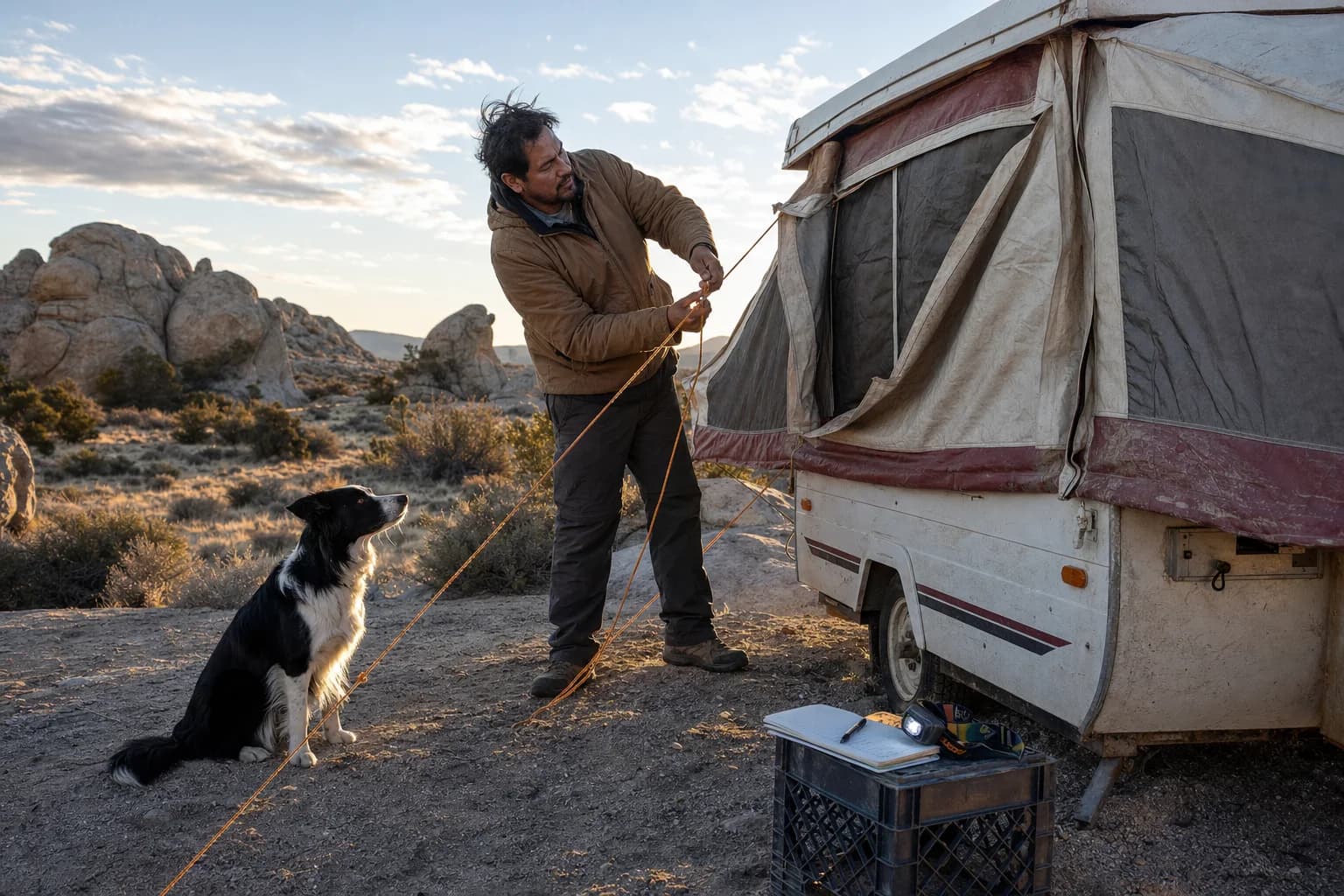
Gabe teaches eighth-grade science, which means his travel calendar is generous in theory and heavily annotated in practice. He found the Coleman on a neighborhood listing for $2,400. The canvas smelled like a garage, one zipper was missing teeth, and the seller included a milk crate of parts labeled probably important.
His first trip to City of Rocks ended with a 3 a.m. lesson in desert wind. The bunk canvas snapped like a sail while Pico paced from end to end. Gabe spent the next morning adding guy lines and the next month telling students that field testing is a legitimate scientific method.
Since then, he has built a rhythm around three-day weekends and school breaks. Spring means Arizona. October means the Sacramento Mountains. For the 2024 solar eclipse he stayed in New Mexico with Pico, hosted a classroom watch party over video, and still calls the two minutes of darkness the best science demonstration of his career.
Gabe keeps costs in a paper notebook. The camper, repairs, and first year of campsites totaled less than some new rooftop tents. His favorite accessory is a $14 headlamp. His dream rig is the same one with a new zipper. He tells first-time campers to stop shopping for a lifestyle and start with one night close to home. If it goes badly, you get a story and can still make Monday's first bell.
Why the cheap camper kept getting used
Gabe never waited for the Coleman to become impressive. Repairs happened between trips, and each one solved an actual problem. He added guy lines after the windstorm, replaced one zipper before monsoon season, and built a small battery box only after two nights proved that flashlights were not enough.
The school calendar gave the route useful boundaries. A nine-day break was not an invitation to cross six states. It was enough time for four meaningful stops and one margin day. Because the camper cost little to tow and insure, Gabe could take three smaller trips instead of protecting one expensive vacation.
If it goes badly, you get a story and can still make Monday's first bell.
Plan the journey
Turn their road into your route.
Use this as a starting itinerary, then adjust it for your rig, weather, pace, and current access rules.
- Trip length
- 9-11 days
- Approximate distance
- About 1,050 miles
- Best window
- March or late October
- Driving rhythm
- One short first leg, then 2-night bases
- Booking strategy
- Mix reservable state parks with one flexible public-land backup
- Working budget
- $550-$900 with a paid-off pop-up
Follow this route.
Drive estimates are planning numbers, not promises. Fuel, food, road work, and a trailer turn every map estimate into a longer day.
Las Cruces to City of Rocks
2 nightsAbout 2 hours
Start close to home. Use the first afternoon to raise the pop-up carefully, inspect canvas tension, and walk among the rock formations.
Watch for: Wind matters more in a pop-up than in a hard-sided trailer. Check the forecast by hour.
Chiricahua National Monument area
2 nightsAbout 3 hours
Hike early, rest during the warmer afternoon, and use the second day for a shorter loop and maintenance.
Watch for: Mountain roads and campground size require advance checking for trailers.
Bisbee or Kartchner Caverns region
1-2 nightsAbout 2 hours
Choose town time or a reservable state-park base. This is the shower, laundry, and grocery midpoint.
Watch for: Do not leave food or coolers exposed in warm weather, even during a quick stop.