
They Ditched the Five-Year Plan
Retirement began with a five-year itinerary. A broken cabinet latch helped turn it into something better.
Their story
Dennis retired with a spreadsheet. It had five years of routes, mileage targets, fuel estimates, and a color for every season. Ruth gave the spreadsheet two weeks. By Kentucky, a spring flood closed their intended campground and sent them to a county park they had never heard of. They stayed six days and met friends they still visit.
The Palmers sold their house in 2018 and assumed full-time travel would feel like a permanent vacation. It felt more like moving day followed by plumbing. They learned slowly: travel 200 miles, stay at least four nights, never arrive after dark, and keep Mabel's leash in the truck rather than under the slide.
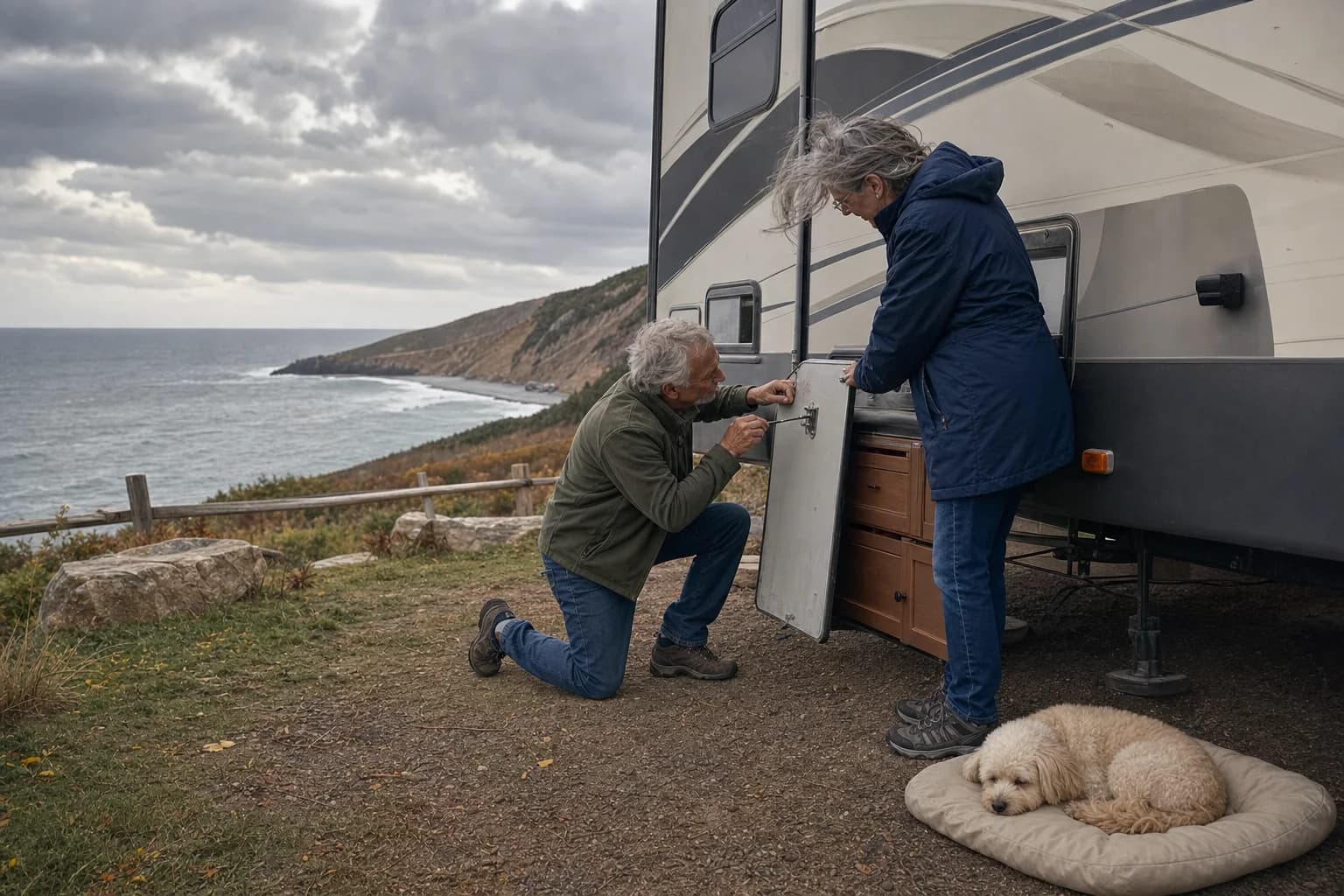
In 2020, they paused for four months near Dennis's sister in Ohio. The interruption made them question whether to continue. Instead, they left again with a smaller map and fewer promises. Their best season came later in Atlantic Canada. In Cape Breton, a cabinet latch failed for the third time while the wind pushed salt through the campground. Ruth fixed it with a screwdriver while Dennis held the door and Mabel slept through the entire operation.
They no longer call themselves full-time travelers. They call themselves slow visitors. Some years include eight states. Some include three. Christmas may happen with family, at an RV park potluck, or in a quiet site with a tiny paper tree. Dennis still maintains a spreadsheet, but the route cells are blank. Ruth considers this progress.
The difference between full-time and constant motion
The Palmers' first year was organized around distance. Their fifth year was organized around how long they wanted to remain curious about a place. Seven nights gave them a grocery store, a walking route, a favorite bakery, and neighbors they could recognize. That sense of temporary belonging was what they had expected retirement travel to feel like.
Dennis still tracked fuel and maintenance, but the spreadsheet no longer dictated departure. If weather made the coast unpleasant, they waited. If a cabinet latch broke, they repaired it without sacrificing the next reservation. Slow travel cost less in fuel, reduced wear, and left room for the unexpected invitations that became their favorite memories.
Ruth considers this progress.
Plan the journey
Turn their road into your route.
Use this as a starting itinerary, then adjust it for your rig, weather, pace, and current access rules.
- Trip length
- 5-7 weeks
- Approximate distance
- About 3,400 miles one way with regional loops
- Best window
- Mid-August through early October
- Driving rhythm
- 200 miles or less, then 4-7 nights stationary
- Booking strategy
- Reserve holiday weekends and national parks; leave ordinary weekdays open
- Working budget
- $5,500-$8,000 per month for full-time travel
Follow this route.
Drive estimates are planning numbers, not promises. Fuel, food, road work, and a trailer turn every map estimate into a longer day.
Ohio to the Finger Lakes
4 nightsAbout 6 hours
Begin with a familiar-service region. Visit one winery or town, then spend a full day handling chores before crossing farther east.
Watch for: A long fifth wheel needs carefully selected fuel and lunch stops.
Vermont or New Hampshire
5 nightsAbout 5 hours
Choose one mountain base rather than chasing foliage. Travel midweek and keep an eye on campground closing dates.
Watch for: Older campgrounds can have tight trees, narrow roads, and limited big-rig sites.
Acadia region
7 nightsAbout 5 hours
Use transit when available, plan one early-morning park day, and reserve the rest for coastal towns and ordinary rest.
Watch for: Acadia camping and popular access points require planning. Confirm current park reservations and vehicle rules.