
The Rule That Slowed Down 29 National Parks
One rented motorhome became a family goal: visit every national park slowly enough to remember breakfast.
Their story
The Patels rented a motorhome for spring break in 2019 because flights to California were expensive. Rohan watched the orientation video twice and still drove away with a storage door open. A stranger at the first traffic light pointed it out. The family has treated that as the official start of their RV education.
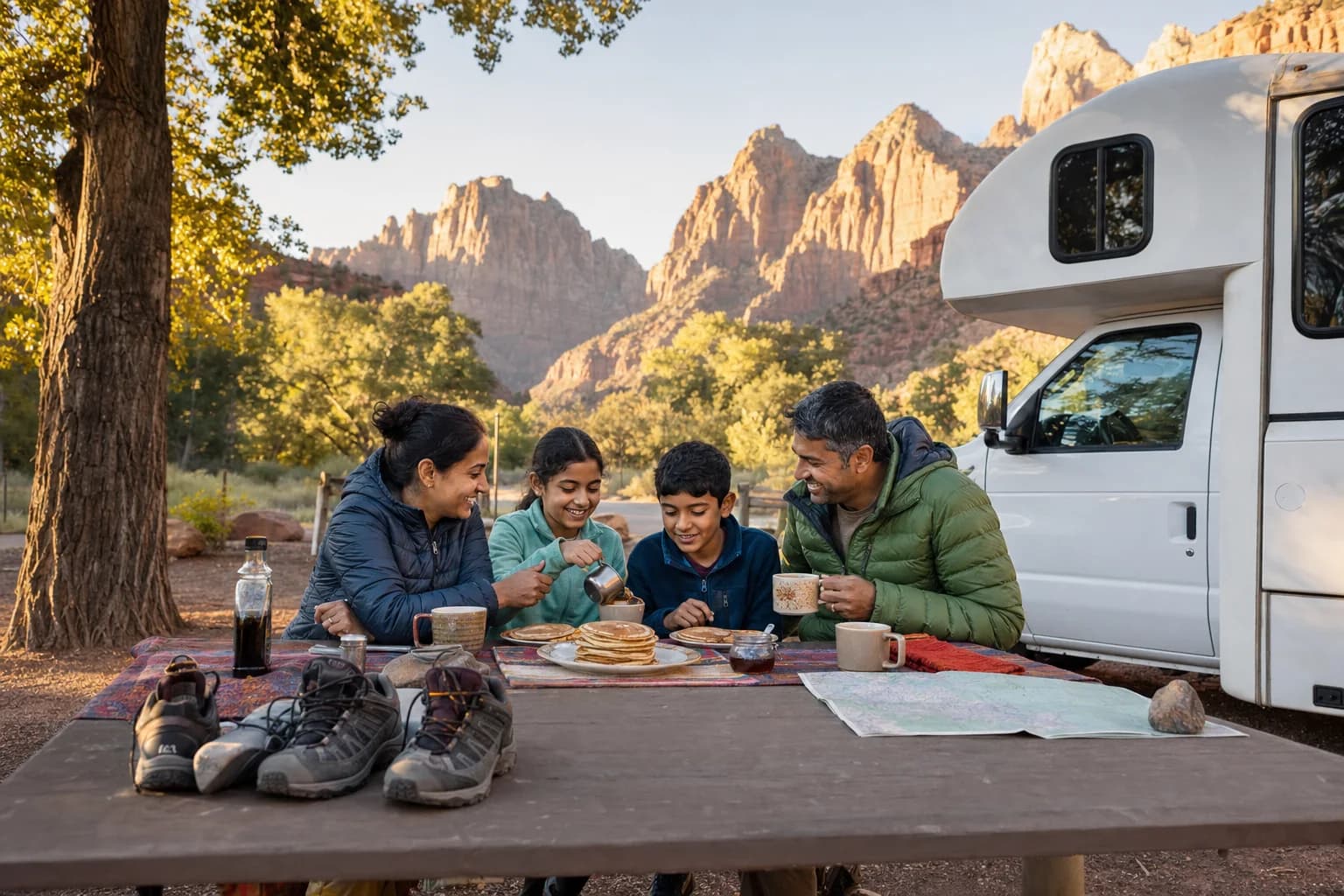
They bought a used Class C later that year and began counting parks. At first, the count encouraged frantic loops. Zion before lunch, Bryce by dinner, Capitol Reef tomorrow. The children remembered the campground pancakes more clearly than the overlooks. Neha proposed a new rule: two nights minimum, three when possible, and no park counted unless everyone had taken a walk.
That slower pace carried them through 2020 weekends in Texas and into longer summer routes. They celebrated Diwali near Great Smoky Mountains with battery candles in the windows and sweets from a grocery store two towns away. At Yellowstone, a bison traffic jam made them late to everything and improved the day considerably.
Their park count is 29, but the family resists ranking them. Dev votes for White Sands because sledding on gypsum felt impossible. Maya chooses Acadia for popovers. Rohan says Zion at sunrise. Neha says whichever park contains clean laundry. They want to reach Alaska, though nobody is willing to assign a deadline. The rule remains: a place is not a checklist item if you cannot remember what you ate there.
The family rule that fixed park fatigue
The Patels' first parks trip rewarded speed. Every arrival produced a new sign and another badge. By day six, nobody wanted to leave the motorhome. Neha asked each person to name one thing they remembered clearly. Three answers involved food, not viewpoints. The family stopped counting a park unless they had taken a walk and eaten one unhurried meal there.
That rule reshaped the itinerary. Mornings held the popular outing. Afternoons were for naps, laundry, visitor centers, and campground wandering. The Class C stayed parked whenever a shuttle or bicycle could replace it. The pace was slower, but the children began to form their own relationships with each place.
The rule remains: a place is not a checklist item if you cannot remember what you ate there.
Plan the journey
Turn their road into your route.
Use this as a starting itinerary, then adjust it for your rig, weather, pace, and current access rules.
- Trip length
- 17-20 days
- Approximate distance
- About 2,600 round-trip miles
- Best window
- Late March, April, October, or early November
- Driving rhythm
- Two or three nights per park, never more than two major sights in one day
- Booking strategy
- Reserve Zion first, then Bryce, Capitol Reef, and transit stops
- Working budget
- $2,800-$4,000 for a family of four
Follow this route.
Drive estimates are planning numbers, not promises. Fuel, food, road work, and a trailer turn every map estimate into a longer day.
Plano to Palo Duro Canyon
2 nightsAbout 6 hours
Use the canyon as the first real destination, not a sleep stop. Take one easy hike and make the second evening quiet.
Watch for: Panhandle wind can be intense, and canyon weather differs from the rim.
Santa Fe
2 nightsAbout 5 hours
Adjust to elevation, visit town, and restock before the desert parks.
Watch for: Children may feel altitude before adults notice it.
Monument Valley region
2 nightsAbout 6 hours
Use a guided or permitted experience that respects current Navajo Nation access requirements. Make sunset a bonus, not the only reason to stop.
Watch for: Tribal-land rules and time-zone behavior can differ from nearby parks. Verify directly.
Zion