
Chasing the Eclipse Across America
A 16-foot trailer carried the Ito family from rainy Oregon to a patch of clear Texas sky for the 2024 eclipse.
Their story
The Itos bought a used Scamp because it was one of the few trailers their RAV4 could reasonably tow. Kenji liked the fiberglass shell. Naomi liked that there was nowhere to accumulate clutter. Emi, then eight, liked the tiny upper bunk and immediately named it the nest.
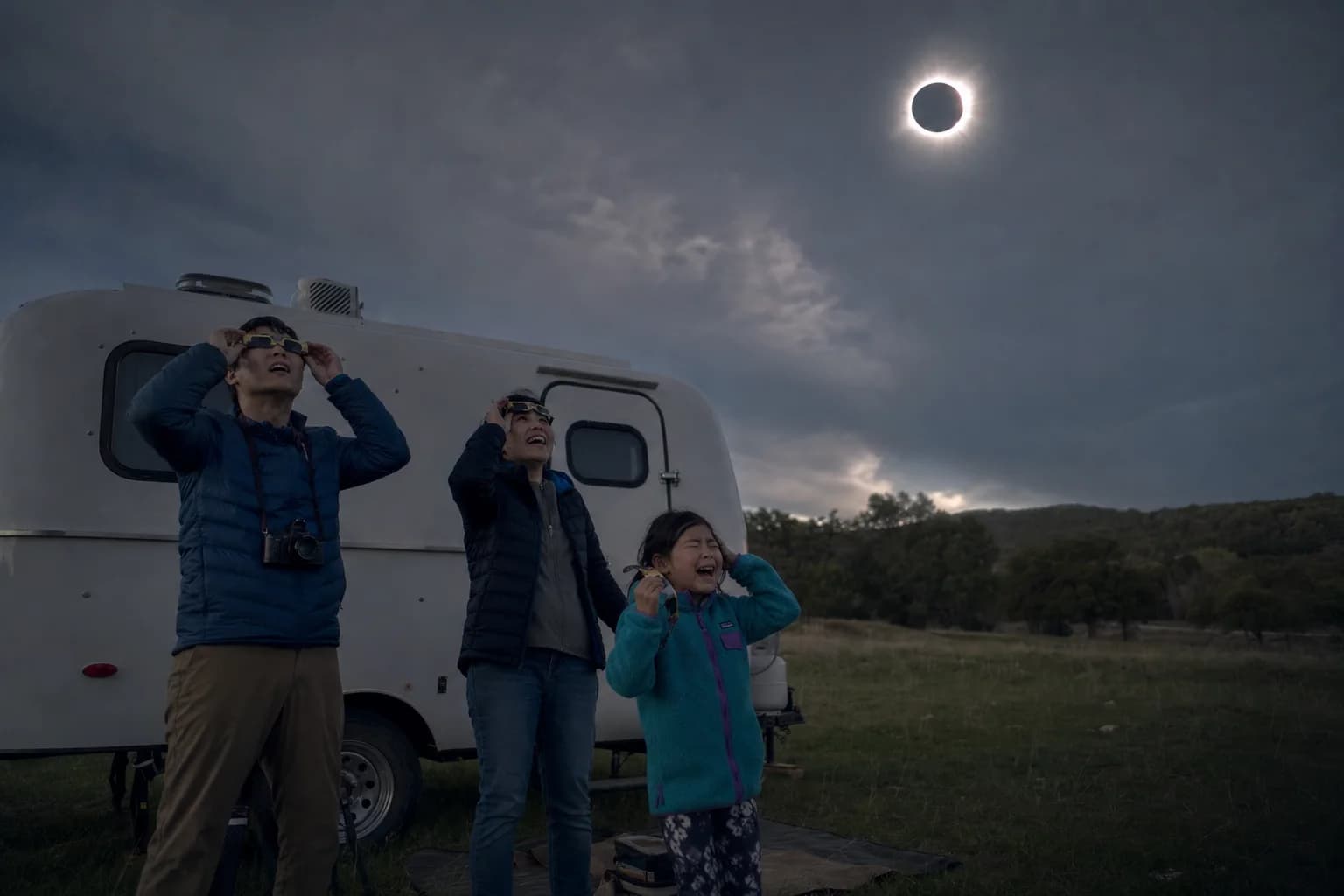
Their boldest trip followed the path of the April 2024 total solar eclipse. They left Portland during spring break, crossed high desert and late-season snow, and joined friends at a small ranch campground in Texas. Forecasts turned pessimistic. By eclipse morning, everyone had three weather apps open and no useful conclusions.
Clouds covered the sun until minutes before totality. Then a clean opening moved across the sky. The temperature dropped, birds quieted, and the campground erupted when the corona appeared. Emi cried, then laughed at herself for crying. Naomi forgot to take the photograph she had planned for two years.
The return trip was deliberately slow. They stopped at state parks that had been dots on the route and spent Emi's birthday beside a reservoir in Utah with a cake baked in a Dutch oven. The Scamp remains awkward, cozy, and just large enough. Their next celestial plan is less urgent. They want dark skies in Saskatchewan, whenever the road and school calendar line up.
Why they planned for clouds
The Itos could not control the weather, so they controlled their ability to wait. Arriving three days early gave them time to watch forecasts without towing in event traffic. They selected a base with open space, legal viewing, bathrooms, and enough ordinary activities if the sky stayed gray.
When the clouds opened, the moment felt spontaneous even though the practical work had been done for months. Naomi missed the photograph because she watched. That became the family lesson: planning should protect the experience, not replace it.
They want dark skies in Saskatchewan, whenever the road and school calendar line up.
Plan the journey
Turn their road into your route.
Use this as a starting itinerary, then adjust it for your rig, weather, pace, and current access rules.
- Trip length
- 22-25 days
- Approximate distance
- About 4,200 round-trip miles
- Best window
- Event dates determine the trip; build for spring snow and desert heat
- Driving rhythm
- 250-mile maximum legs with a 3-day weather buffer near totality
- Booking strategy
- Book the eclipse base first, then refundable transit nights
- Working budget
- $4,200-$6,000
Follow this route.
Drive estimates are planning numbers, not promises. Fuel, food, road work, and a trailer turn every map estimate into a longer day.
Portland to eastern Oregon
2 nightsAbout 5 hours
Begin with a cold-weather shakedown and confirm mountain passes before continuing.
Watch for: Spring weather can affect every eastbound route.
Salt Lake City region
2 nightsTwo moderate legs
Use the city for supplies, tire checks, and one rest day.
Watch for: Do not arrive in the remote southern leg needing service.
Southern Utah
3 nightsAbout 4 hours
Choose one park or state-park base rather than attempting the full Utah circuit.
Watch for: Cold nights and holiday crowds can coexist.
New Mexico
3 nightsTwo shorter legs
Keep the route flexible enough to follow safer weather and avoid high-pass snow.