
They Found More Freedom in 23 Feet
After seven years in a Class A motorhome, the Sinclairs found freedom in fewer cabinets.
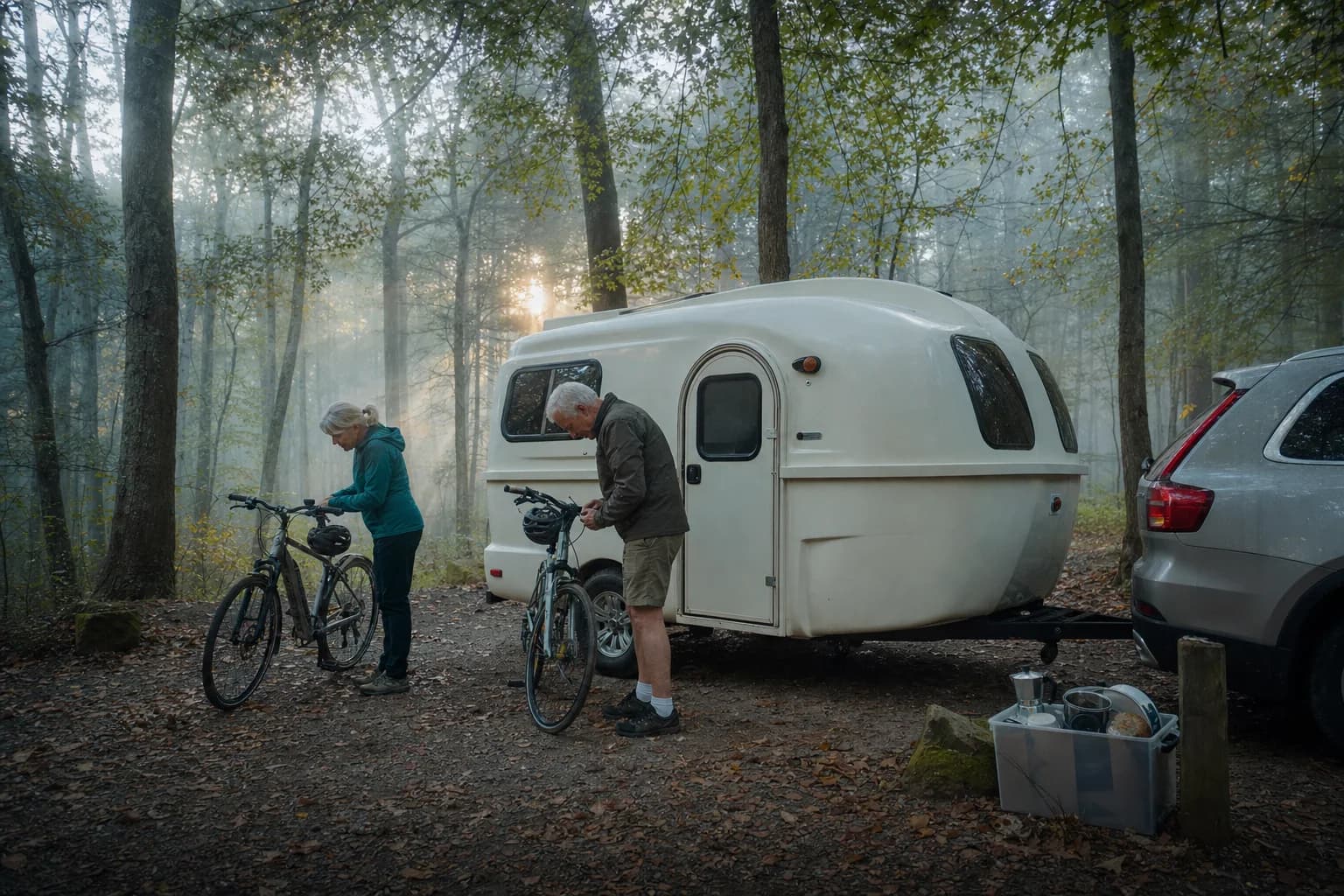
Their story
Claire and Matthew began in a 38-foot Class A with two bathrooms, four televisions, and more storage than their first apartment. It was comfortable. It was also the reason they skipped older campgrounds, mountain roads, and any fuel station that looked even slightly complicated.
For seven years, they traveled widely and accumulated gear to fill every cabinet. The turning point came in Maine when the motorhome could not fit the campground they wanted. They parked elsewhere, walked through the smaller sites, and started talking about what they actually used.
In 2024, they sold the motorhome and bought a 23-foot fiberglass trailer. The first month felt like moving into a hallway. They donated kitchen gadgets, reduced clothes, and learned to pass each other without negotiation. Then they returned to Cades Cove, tucked into a wooded site, and rode bicycles at dawn while the loop road was quiet.
Going smaller did not make travel simpler in every way. Towing requires its own attention, and a compact wet bath tests any marriage. Yet the new rig has widened their map. They can stay in national park campgrounds, turn around on ordinary roads, and pack in an hour. Claire calls it their second beginning. Matthew still misses one television, but cannot remember which one.
The first month in a hallway
The small trailer initially felt less efficient because every item had been selected for the Class A. Oversized chairs, duplicate cookware, and bulk groceries did not shrink with the floor plan. Claire and Matthew removed half their gear after the second night.
Once the inventory matched the rig, the benefits became obvious. They could choose wooded public campgrounds, turn around without a spotter meeting, and stop at ordinary fuel stations. Downsizing was not deprivation. It was editing.
Matthew still misses one television, but cannot remember which one.
Plan the journey
Turn their road into your route.
Use this as a starting itinerary, then adjust it for your rig, weather, pace, and current access rules.
- Trip length
- 8-10 days
- Approximate distance
- About 750 miles
- Best window
- April, May, October, or early November
- Driving rhythm
- One-night shakedown, then 3-night park bases
- Booking strategy
- Use familiar campgrounds to compare the smaller rig honestly
- Working budget
- $900-$1,500
Follow this route.
Drive estimates are planning numbers, not promises. Fuel, food, road work, and a trailer turn every map estimate into a longer day.
Nashville to Land Between the Lakes
2 nightsAbout 2 hours
Test storage, towing, and wet-bath routines close to home.
Watch for: Do not solve every inconvenience by buying another object.
Cumberland Gap region
2 nightsAbout 4 hours
Choose an older, wooded campground the Class A could not access. Let fit and maneuverability prove the reason for downsizing.
Watch for: Smaller does not remove the need to verify site length and grades.
Great Smoky Mountains
3 nightsAbout 2.5 hours
Park the trailer once, bicycle or drive the truck, and use the campground as a quiet base.
Watch for: Park campgrounds may lack hookups and have generator-hour limits.
Blue Ridge return
1 nightAbout 3 hours
Add a final scenic stop only if weather and energy support it.